Foundation Crack and Leak Solutions
Basement Crack Repair in Fort Wayne
Have a crack that leaks or keeps growing? Get a Free Estimate
Foundation Crack and Leak Solutions
Have a crack that leaks or keeps growing? Get a Free Estimate
A crack in a basement wall can allow water to enter during wet weather, leaving streaks, deposits, and damp areas behind. Some cracks remain narrow and stable, while others may change as the foundation experiences soil pressure or movement. Knowing the difference is important before choosing a repair.
Basement Waterproofing Fort Wayne focuses on identifying the condition of the crack and its role in the water problem. Crack width, direction, location, surrounding material, and evidence of movement all affect the next step. A leaking nonstructural concrete crack may be suitable for a localized repair, but structural movement requires a different approach. We help homeowners understand why that distinction matters.
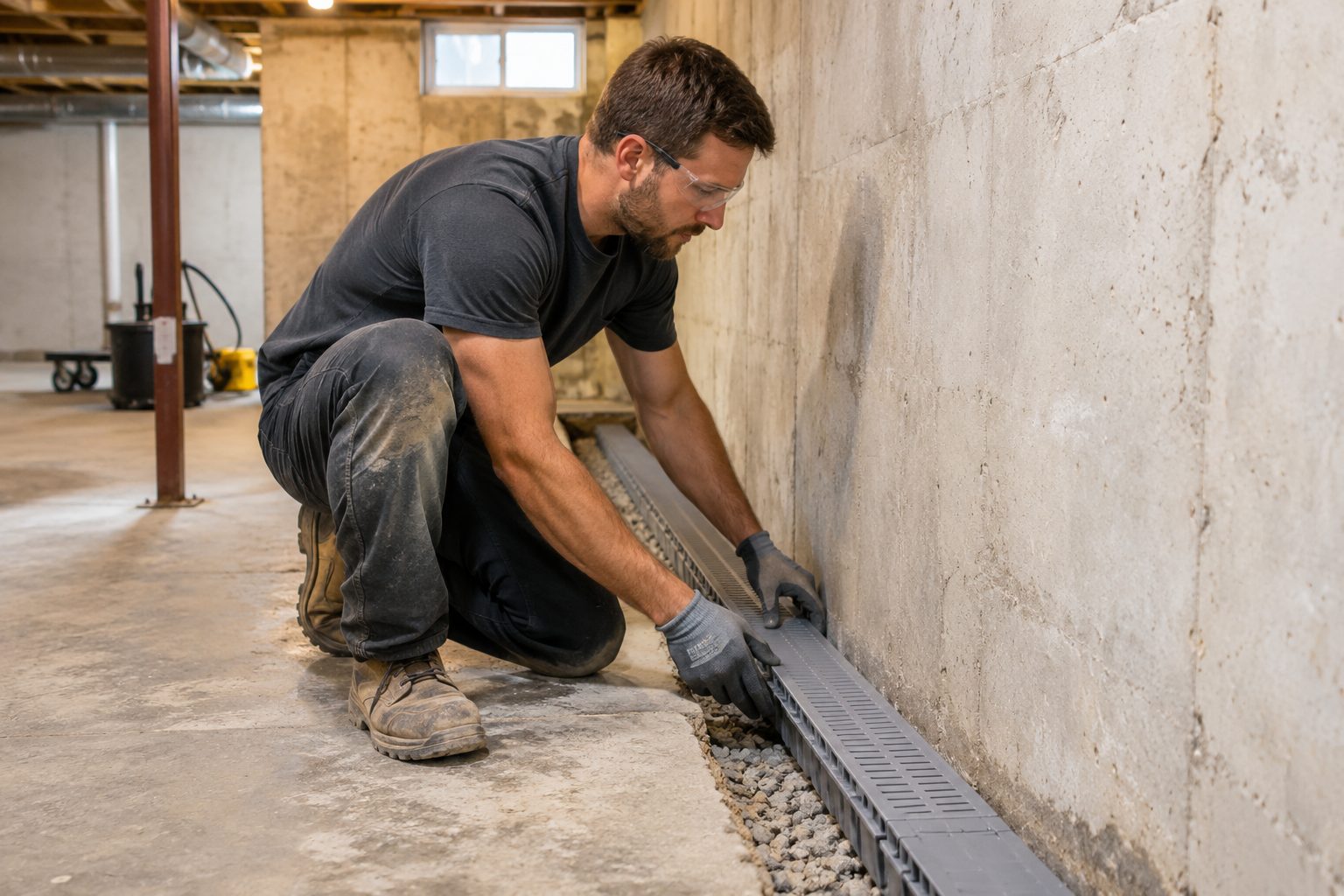
## Not Every Crack Means the Same Thing Vertical, horizontal, and stair-step cracks can form for different reasons. Material shrinkage, settlement, lateral pressure, and deterioration may all play a role. A crack that carries water is not automatically structural, but the possibility of movement should be considered. ## Seal the Right Problem Surface patching may cover a visible opening without blocking the full water path. Repair methods need to match the foundation material, crack condition, and type of leakage.
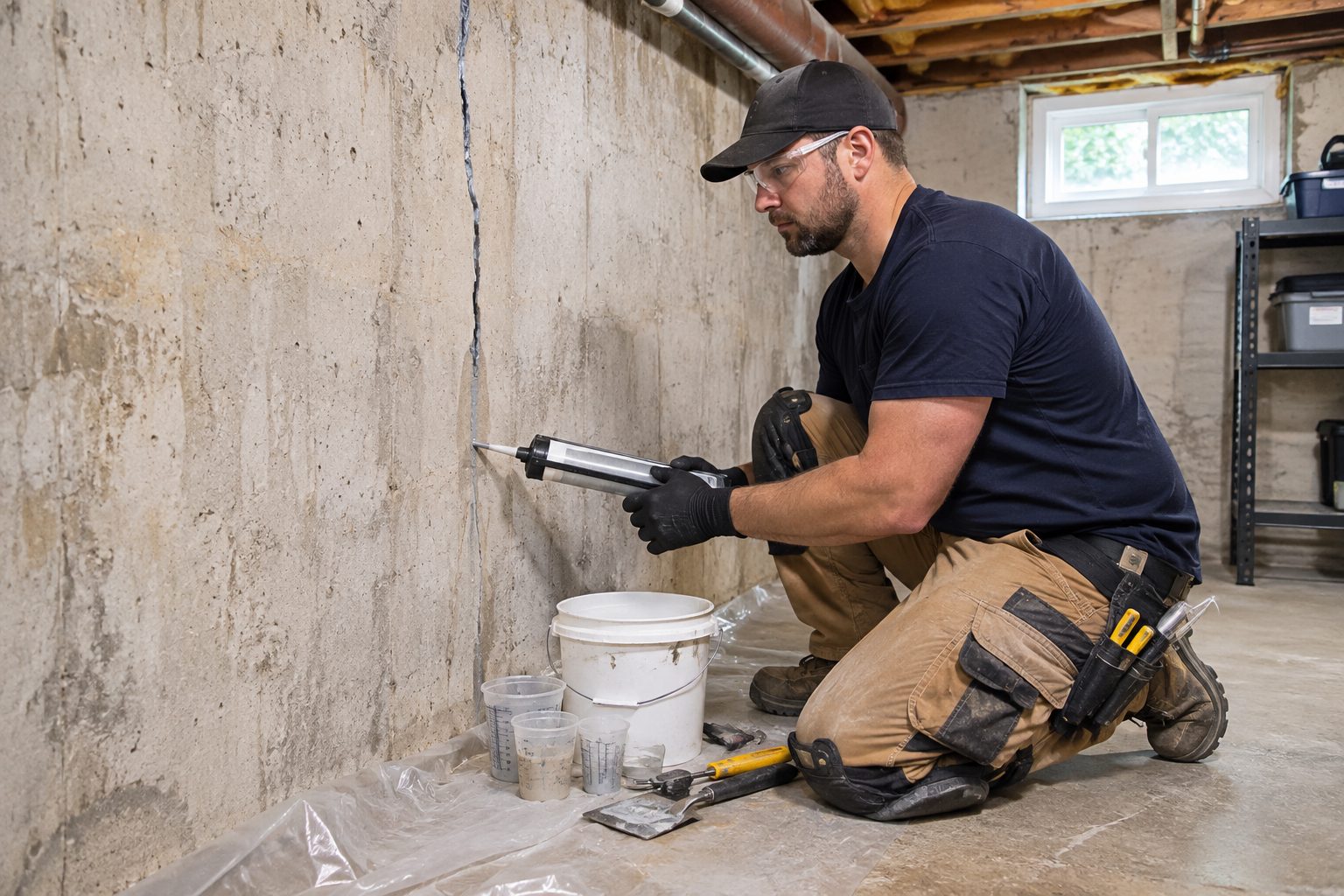
Vertical cracks in poured concrete walls may develop because of shrinkage or movement. When water follows the opening, staining or dampness may become more noticeable after rainfall. If the crack is nonstructural and otherwise suitable, injection or another targeted sealing method may be considered. Movement, displacement, and material condition should be reviewed before selecting a technique.
Horizontal cracks can be associated with lateral pressure against basement walls, particularly when accompanied by bowing or visible displacement. These signs should not be treated as routine leak repairs. Structural evaluation may be necessary to determine whether stabilization or another corrective measure is needed. Sealing water entry alone does not resolve a wall that continues to move.
Stair-step cracking follows the joints between masonry blocks or bricks. It may be associated with settlement, wall movement, or other conditions affecting the foundation. The pattern, extent, and change over time are important clues. Water entry may be one concern, but a repair plan should account for the condition of the wall and the reason the cracking developed.
Certain cracks in poured concrete may be suitable for injection techniques using repair materials selected for the application. Flexible sealing materials and structural bonding materials serve different purposes. The correct approach depends on crack accessibility, moisture, movement, and whether the repair is intended to stop leakage or address another condition. Injection is not appropriate for every foundation crack.
If an earlier patch has failed, the crack may still be exposed to water pressure or movement. Simply applying another surface coating may not change the underlying conditions. Reviewing the previous repair, surrounding moisture, and crack behavior helps determine whether a different sealing method or broader drainage measure is needed.
We consider movement and structural warning signs before discussing a sealing method.
When a crack is the primary leak path, a focused repair may be more appropriate than a broad waterproofing installation.
We distinguish stopping leakage from addressing foundation movement.
Share the location and symptoms of your basement crack so we can discuss next steps.
Free — no obligations
Identify the crack, moisture evidence, and timing of leaks.
Consider its direction, width, condition, material, and movement.
Discuss localized sealing or further structural assessment as appropriate.
Clarify what the selected repair can address and when additional moisture control may be needed.