Waterproofing for Coesse Properties
Basement Waterproofing in Coesse, IN
Dealing with foundation moisture on your property? Get a Free Estimate
Waterproofing for Coesse Properties
Dealing with foundation moisture on your property? Get a Free Estimate
Coesse is a small, unincorporated community in Union Township, Whitley County, with a different residential character from Fort Wayne's dense neighborhoods. Properties in and around Coesse may have larger lots, open land, older homes, or drainage conditions shaped by nearby agricultural and rural uses. These surroundings make it important to consider the entire property when investigating basement water.
A basement can develop moisture problems even when the yard appears to drain well. Water may move through saturated soil, enter through a crack, or collect beneath a foundation slab. We help homeowners understand how their building and site conditions may contribute to leaks before discussing a specific waterproofing approach.
In a rural setting, drainage patterns may extend well beyond the immediate foundation. The slope of nearby ground, roadside ditches, low areas, and drainage features can influence where rainwater travels. A house near the Coesse Corners area may face different site conditions from a home on a larger parcel outside the community center.
Open space does not guarantee good drainage. Some yards hold water after long storms, and soil around a home can remain saturated even when the visible surface begins to dry. Backfilled areas surrounding basement walls can behave differently from undisturbed ground farther away.
A useful assessment looks at what is happening close to the house rather than assuming that water simply drains away because the property has room.
Some rural homes have foundations that reflect older construction methods or later additions. Masonry walls, patched openings, irregular foundation transitions, and previous drainage changes may all affect moisture entry.
An older basement may show mineral deposits, damp joints, or sections of wall that become wet only during certain weather conditions. These signs do not always call for the same solution as a poured-concrete basement in a modern subdivision.
We pay attention to the foundation material and the condition of previous repairs. When a wall shows structural movement, that concern should be evaluated separately from ordinary leak sealing.
Rural properties sometimes include additions or connected spaces built on different foundation types. A home might have a full basement under one section and a crawlspace beneath another. Moisture can behave differently in each area.
Crawlspaces with exposed earth may experience ground vapor and elevated humidity without obvious flooding. Other spaces may collect water after wet weather because of their elevation or drainage conditions. Vapor control, drainage, and pumping address different aspects of the problem.
If dampness is spreading through a crawlspace, it is important to distinguish moisture vapor from actual liquid water. Covering the soil without addressing recurring standing water may leave the main issue unresolved.
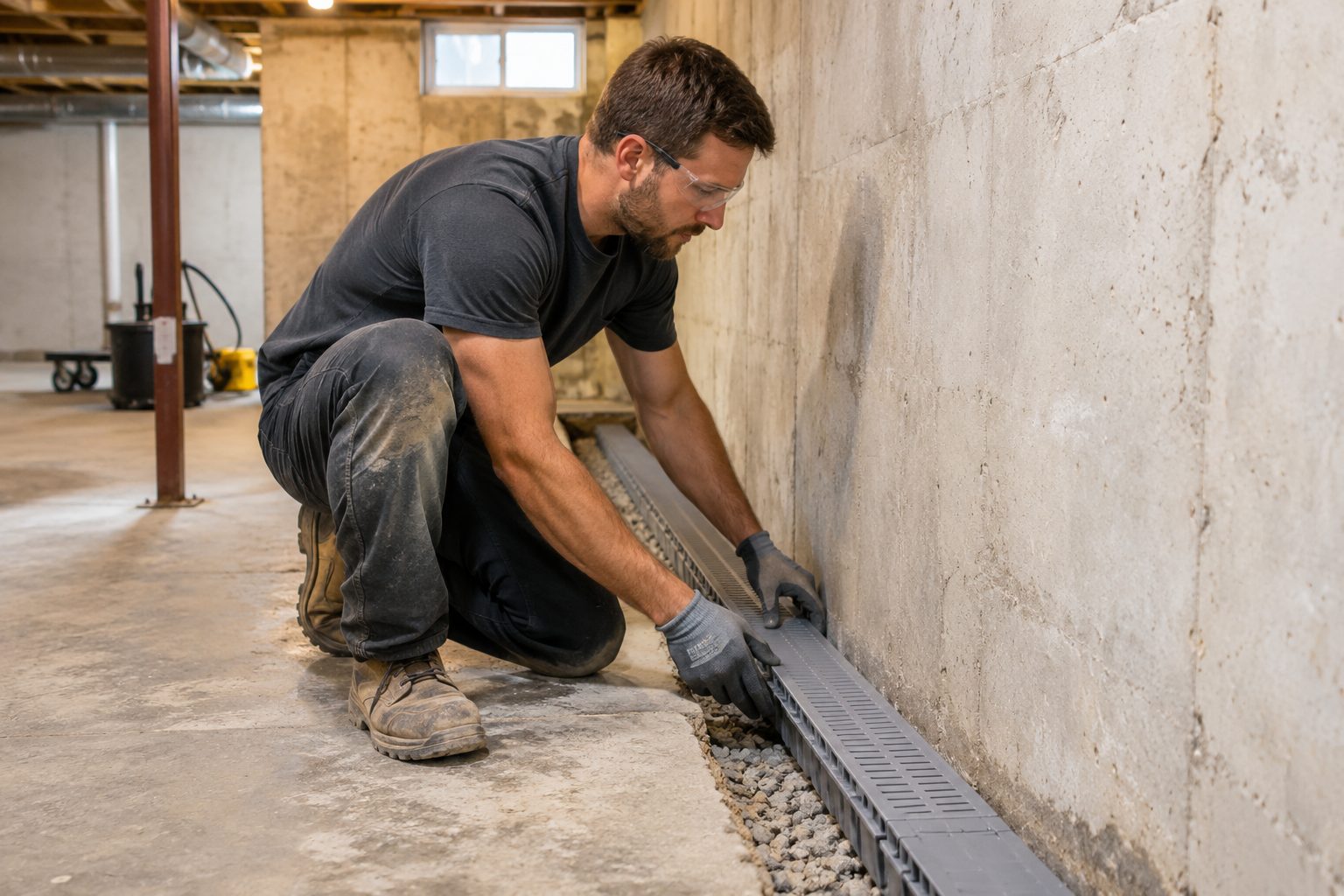
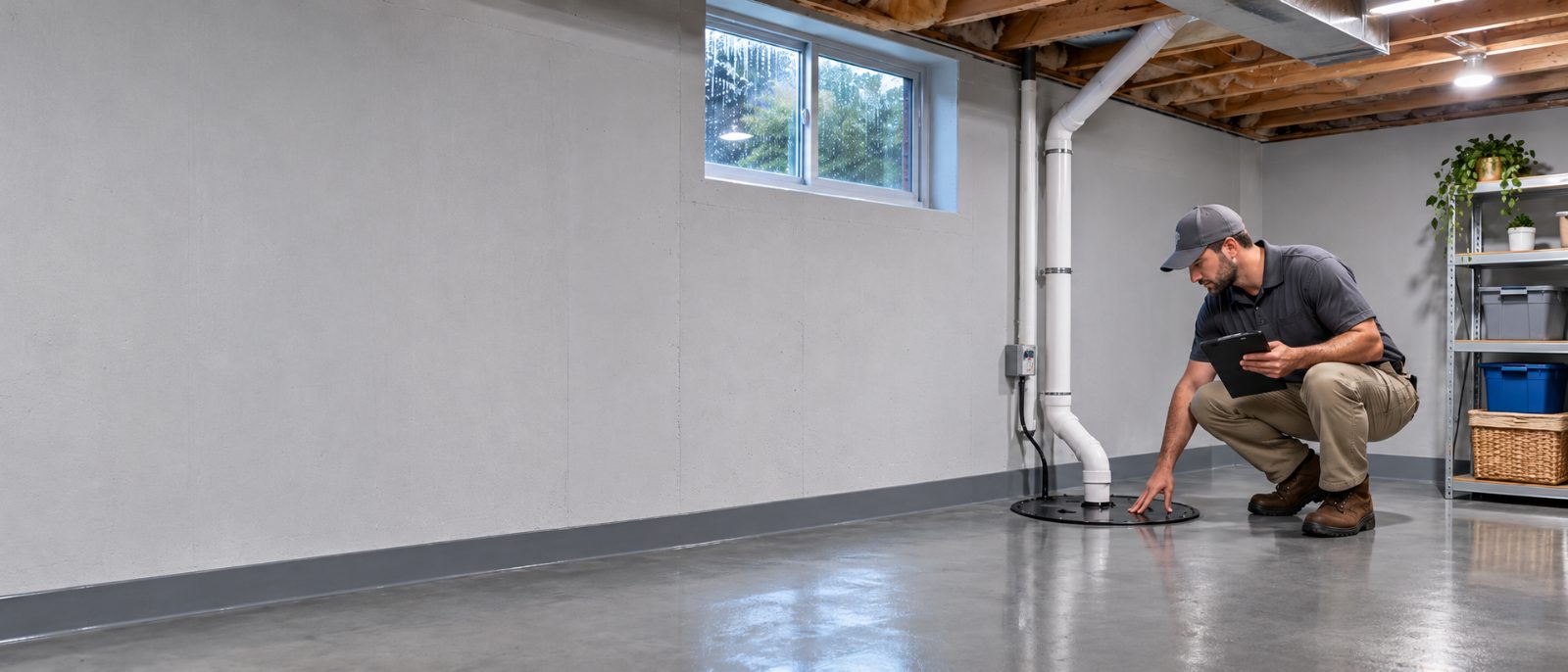
Where a basement takes on groundwater, a collection and pumping system may be appropriate. For a more isolated leak, a targeted repair could be sufficient. Equipment decisions depend on the amount of water, the foundation layout, and where the collected water can be discharged.
On larger rural properties, there may appear to be more flexibility in choosing a discharge route. That does not eliminate the need to consider surface flow, erosion, freezing, neighboring property, and applicable drainage requirements.
A reliable plan should move water away from the foundation without creating a new drainage problem. The path from the sump basin to the discharge point deserves careful consideration.
Not every Coesse basement leak begins with deep water. A musty smell after spring rains, recurring staining near an exterior wall, damp insulation, or moisture along the slab edge can signal the need for investigation.
Homeowners can note whether the symptoms are linked to heavy storms, seasonal snowmelt, or periods of persistent humidity. That history helps identify whether the concern is more likely to involve drainage, a specific foundation opening, or condensation.
If you live in Coesse, IN, tell us about the home's foundation type, the timing of the moisture, and any drainage work already completed. You can reach us at 305 555 0199 to discuss the next step.
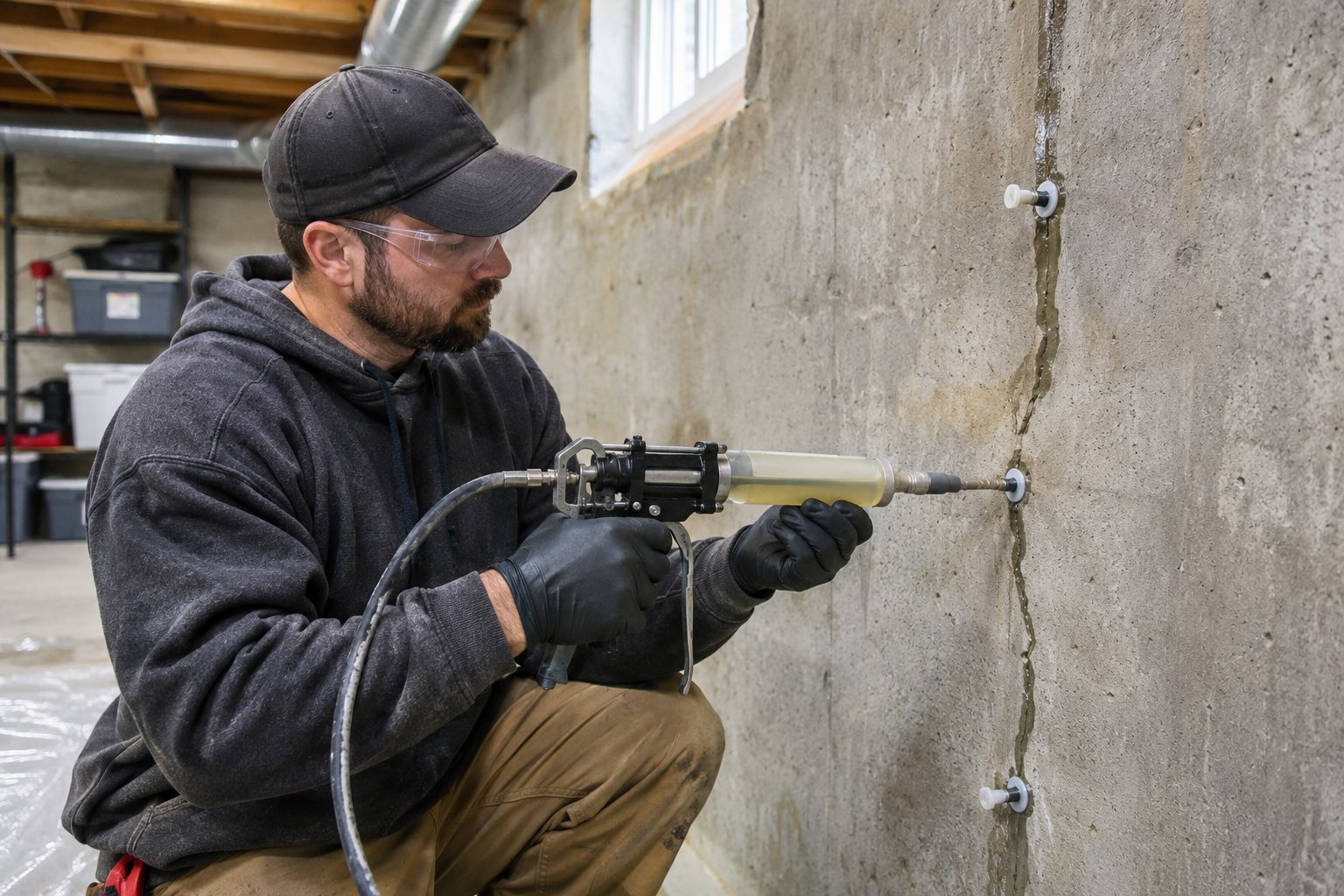
We consider the relationship between the house, lot grading, and surrounding drainage conditions.
We ask about the foundation type, previous repairs, and water patterns to help identify suitable options.
Different foundation layouts may require distinct approaches to water collection, sealing, and moisture control.
For a rural home or village property in Coesse, IN, call 305 555 0199 to discuss basement and crawlspace moisture.
Free — no obligations